
Practical Guide
How to Find Your Janma Rasi: A Modern Guide to Your Cosmic Identity
If you have ever felt that your "Zodiac sign" didn't quite capture the depth of your emotional world, you are likely looking at the wrong part of the sky. In the vast and ancient system of Vedic astrology, the center of your identity is not where the Sun was when you were born, but where the Moon was. This is your Janma Rasi. While Western astrology focuses on your outer personality and your path in the world (the Sun), Vedic astrology focuses on your internal rhythm, your mental clarity, and your emotional resilience (the Moon). Finding your Janma Rasi is the first step toward understanding why you feel the way you do during cycles like Chandrashtama.
Short answer
How to Find Your Janma Rasi: A Modern Guide to Your Cosmic Identity
A deep-dive into understanding your Vedic Moon sign, the differences between Sun and Moon systems, and how to accurately identify your Janma Rasi using charts and star tables.
Author
Chandrashtama.in Editorial Team
Role
Vedic Timing & Research
Last reviewed
2026-04-21
EST. READING
7 minutes
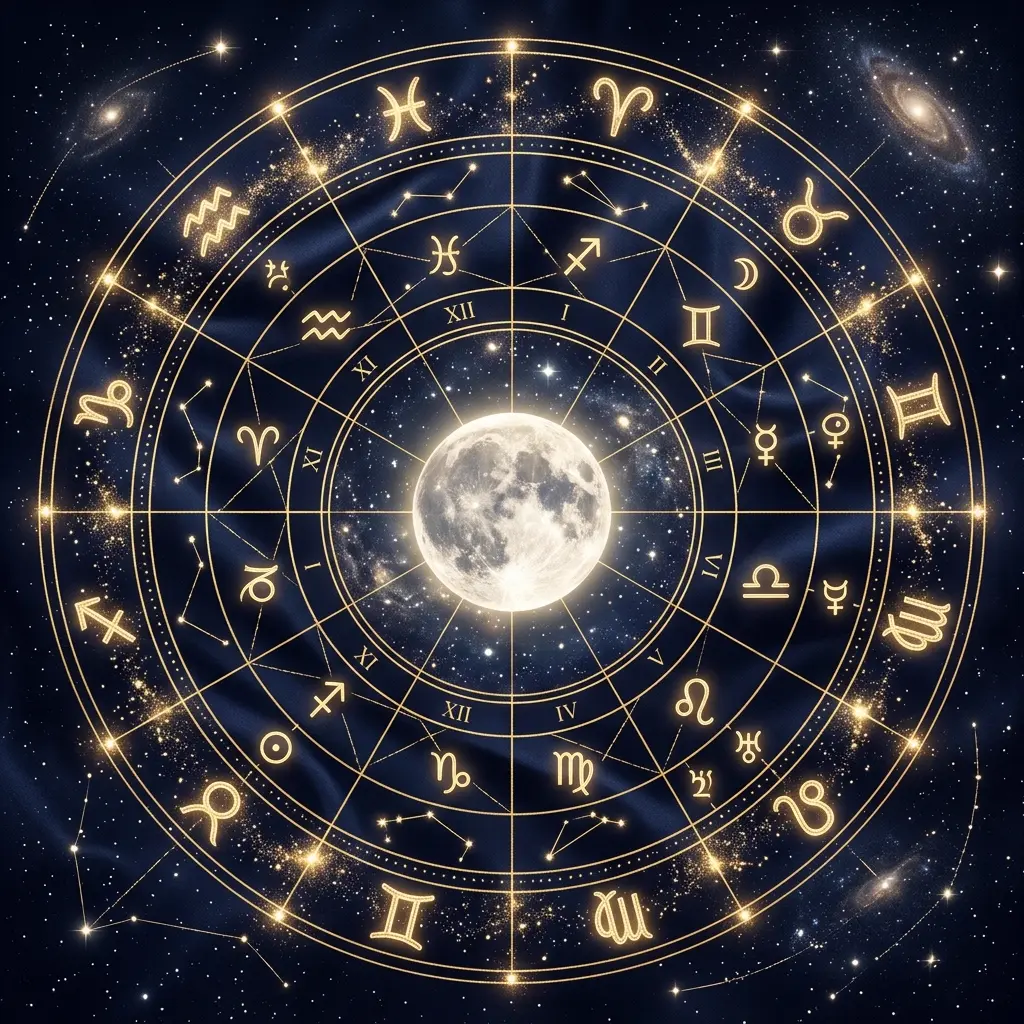
1. The Moon as the Mirror of the Mind
In the ancient Sanskrit texts, the Moon is referred to as "Chandra," and it is said to rule the "Manas" or the mind. This is not the logical, calculating mind of mathematics, but the intuitive, feeling mind of our dreams and reactions. Because the Moon orbits the Earth so quickly, moving through all twelve signs in just twenty-seven days, it captures the fleeting, sensitive nature of our human experience.
Your Janma Rasi is simply the specific zodiac sign where the Moon was positioned at the exact moment of your birth. Think of it as the "emotional weather" that was present when you took your first breath. This sign sets the baseline for how you process stress, how you seek comfort, and how you interact with others on a subconscious level. Understanding this sign is essential because calculators like the one on this site rely entirely on this data point to tell you when your "Low Tide" or Chandrashtama period will occur. (Read more on What is Chandrashtama?).
2. Why Your Western Sign is Different
One of the most common sources of confusion for modern readers is the difference between Western (Tropical) astrology and Vedic (Sidereal) astrology. If you were born on April 15th, you might have spent your whole life identifying as an Aries. However, when you look up your Vedic chart, you might find you are a Pisces. This is not an error; it is a difference in how we measure the sky.
Western astrology is tied to the seasons and the equinoxes. Vedic astrology is tied to the fixed stars in the sky. Because of a phenomenon called the "Precession of the Equinoxes," the two systems have drifted apart by about twenty-three degrees over the last two thousand years. This means that for about 75% of people, their Vedic Moon sign will be one sign "behind" their Western sign.
When we talk about Chandrashtama, we are using the Vedic system. This system is incredibly precise because it accounts for the actual movement of the planets against the backdrop of the stars. To find your true Janma Rasi, you must set aside what you know from newspaper horoscopes and look at your birth data through the Vedic lens.
3. Method 1: The South Indian Square Chart
In many Indian households, a child's birth is recorded in a small booklet or a single-page diagram called a "Jadhagam" or horoscope. In South India, this is typically a square grid divided into twelve boxes. Each box represents a zodiac sign, starting with Aries (Mesha) in the second box from the top left and moving clockwise.
To find your Janma Rasi, look for the box that contains the letters "Ch" or the word "Chandran" (sometimes written as "Moon" in English-language charts). The box where these letters are placed is your Janma Rasi. For example, if "Ch" is in the top-right corner box, your Janma Rasi is Gemini (Mithuna).
You might also see the letters "La" or "As" in another box. This stands for the Lagna or Ascendant, which represents your physical self and your path in life. While the Lagna is very important for a full reading, for the purposes of tracking Chandrashtama, you must ignore the Lagna and focus solely on the box containing the Moon (Chandran).
4. Method 2: The Nakshatra Connection
If you do not have a square chart but you know your "Birth Star" or Nakshatra, you can often identify your Janma Rasi immediately. The zodiac is divided into twenty-seven Nakshatras, and each Nakshatra belongs to a specific sign.
Some Nakshatras fall entirely within one sign. For example, if your Nakshatra is Ashwini, your Janma Rasi is definitely Aries (Mesha). However, some Nakshatras span across two signs. These are divided into four "Padas" or quarters. For instance, if you were born in the first quarter of Krittika, you are an Aries, but if you were born in the second, third, or fourth quarters, you are a Taurus (Rishaba).
If you know your Nakshatra and its Pada, you have all the information you need. You can consult a simple Nakshatra-to-Rasi table (like the one found in our detailed guide on this site) to confirm your Rasi. This method is highly reliable because the relationship between stars and signs is fixed and never changes.
5. Method 3: Using a Digital Calculator
In the digital age, finding your Janma Rasi is easier than ever, provided you have three key pieces of information: your date of birth, your exact time of birth, and your location of birth. Accuracy is paramount here. A difference of just five or ten minutes can sometimes move the Moon from one sign to the next, especially if you were born during a transition period.
When using a calculator, ensure it is set to the "Sidereal" or "Vedic" system. Most calculators will ask for your "City of Birth" because the longitude and latitude are needed to calculate the exact position of the horizon at that moment. Once you enter these details, the software will generate a chart and explicitly list your "Moon Sign" or "Janma Rasi."
If you are unsure of your exact birth time, do not guess. A guess can lead you to follow the wrong Chandrashtama dates for years. Instead, check your birth certificate or ask an older relative for any "horoscope notes" that might have been taken at the hospital. If no time is available, an experienced astrologer can sometimes perform "Birth Time Rectification" to find the correct time through a series of biographical questions.
6. The Practical Benefit: Why Accuracy Matters
You might wonder why we insist on such precision. The reason is that Chandrashtama is a calculation of "degree-based" distance. It occurs when the Moon is exactly 210 to 240 degrees away from its position at your birth. If your Janma Rasi is wrong, your Chandrashtama dates will be completely off. (For more details, see How Chandrashtama Dates are Calculated).
Following the wrong dates is like carrying an umbrella on a sunny day and leaving it at home when it pours. When you know your true Janma Rasi, you gain a reliable "Internal Weather Report." You will start to notice that your days of fatigue or irritability align perfectly with the dates on our calendar. This alignment provides a deep sense of relief because you realize your moods are not random; they are part of a larger, beautiful cosmic cycle.
Once you have confirmed your Rasi, we recommend "testing" it. Look back at the last two months of our Chandrashtama calendar for that sign. Did those dates feel sensitive to you? Did you notice a dip in energy? If the answer is yes, you have found your true cosmic anchor.
7. Conclusion: Stepping into Clarity
Finding your Janma Rasi is more than just a box-ticking exercise. It is a moment of reconnection with the natural world. In a society that pushes us to be the same every day, acknowledging your lunar sign is an act of self-kindness. It is an admission that you are a rhythmic being, influenced by the same forces that pull the tides of the oceans.
Whether you found your sign through a dusty family horoscope or a modern smartphone app, the result is the same: you now have the key to navigating your month with wisdom. Use this knowledge to plan your big meetings, your difficult conversations, and your much-needed rest. Welcome to the journey of living in sync with your stars.
Chandrashtama.in Editorial Team
Vedic Timing & Research
The Chandrashtama.in Editorial Desk focuses on bridging the gap between traditional Vedic astrological rhythms and modern mindful living. Our mission is to provide clear, data-driven insights to help readers navigate their daily timing with confidence.
Check Current Month Dates
Quickly access the specific dates and timings for your rasi for the current month.
Frequently Asked Questions
What if I only know my English sign?
Use our calculator with your birth time and city. There is a 75% chance your Vedic Moon sign is different from your Western sign.
Is birth time mandatory?
Yes, for 100% accuracy. The Moon changes signs every 2.25 days, and its degree position changes every hour.